
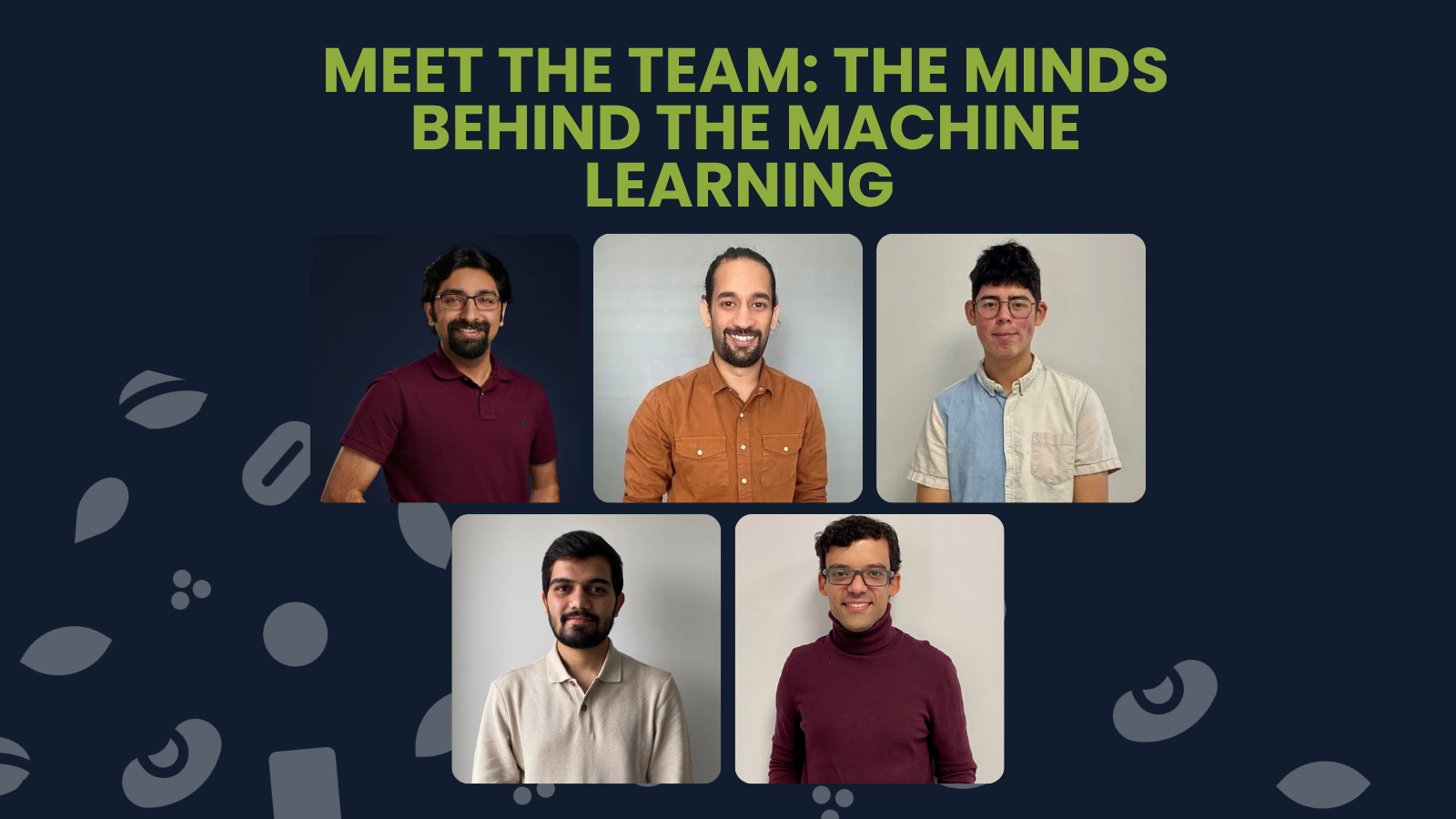
When people hear about automated grain grading, they often think about the technology. Machine vision identifies quality factors. Artificial intelligence processes thousands of images. Machine learning models continue to improve over time. But technology doesn't build itself. Behind every model, every prediction, and every quality assessment is a team working to teach computers how to understand grain.
At Ground Truth Ag, that team brings together expertise in machine learning, data science, and analytical chemistry to solve one challenge: How do you teach a computer to recognize grain quality with the consistency and accuracy the industry expects? "Our job is to look at images and then come up with computer algorithms that will tell us what we see in those images," explains Dr. Aamir Shah, Senior Machine Learning Engineer. "It sounds simple, but it's very challenging."
And he's right.
Unlike manufactured products, grain is a biological material. No two samples are exactly alike. Lighting changes. Growing conditions vary. Quality issues can appear differently from one crop, region, or season to the next. Training technology to understand those differences requires thousands of samples, countless hours of development, and a team with diverse expertise.
Building Models That Learn
The machine learning team is responsible for developing and refining the models that power Ground Truth Ag's technology.
Leading this work are:
Dr. Aamir Shah, Senior Machine Learning Engineer
Vignesh Shankar, Machine Learning Engineer
Nathaniel Vallee, Junior Machine Learning Developer
Vatsal Patel, Junior Data Scientist
Together, they train, test, and improve the systems that analyse grain samples. Every image captured by our benchtop becomes an opportunity to improve performance, helping models become more accurate, more consistent, and better equipped to recognize grain quality factors across a wide range of crops.
Adding the Chemistry Perspective
While machine learning plays a critical role, understanding grain quality requires more than image analysis alone. Dr. Bruno da Fonseca, Analytical Chemist, helps bridge the gap between what the technology sees and the underlying chemistry of the grain.
His work supports the development of models that evaluate factors such as protein, moisture, oil content, and other characteristics that influence storage, processing, and end use performance. By combining chemistry with machine learning, the team gains a more complete understanding of grain quality.
Why Collaboration Matters
No single discipline can solve grain grading on its own. Building practical AI tools requires collaboration between machine learning specialists, data scientists, chemists, grain experts, and industry partners. Every new crop, quality factor, and model improvement reflects contributions from multiple perspectives. That collaboration is what helps ensure the technology remains grounded in real world grain grading challenges while continuing to evolve.
Looking Ahead
When a grain sample is analysed in minutes, it's easy to focus on the result. What often goes unseen is the team behind it. Every model update, every new crop, and every improvement in accuracy is driven by people working to make grain quality assessment faster, more consistent, and more accessible. The technology may be automated. The innovation behind it is deeply human.