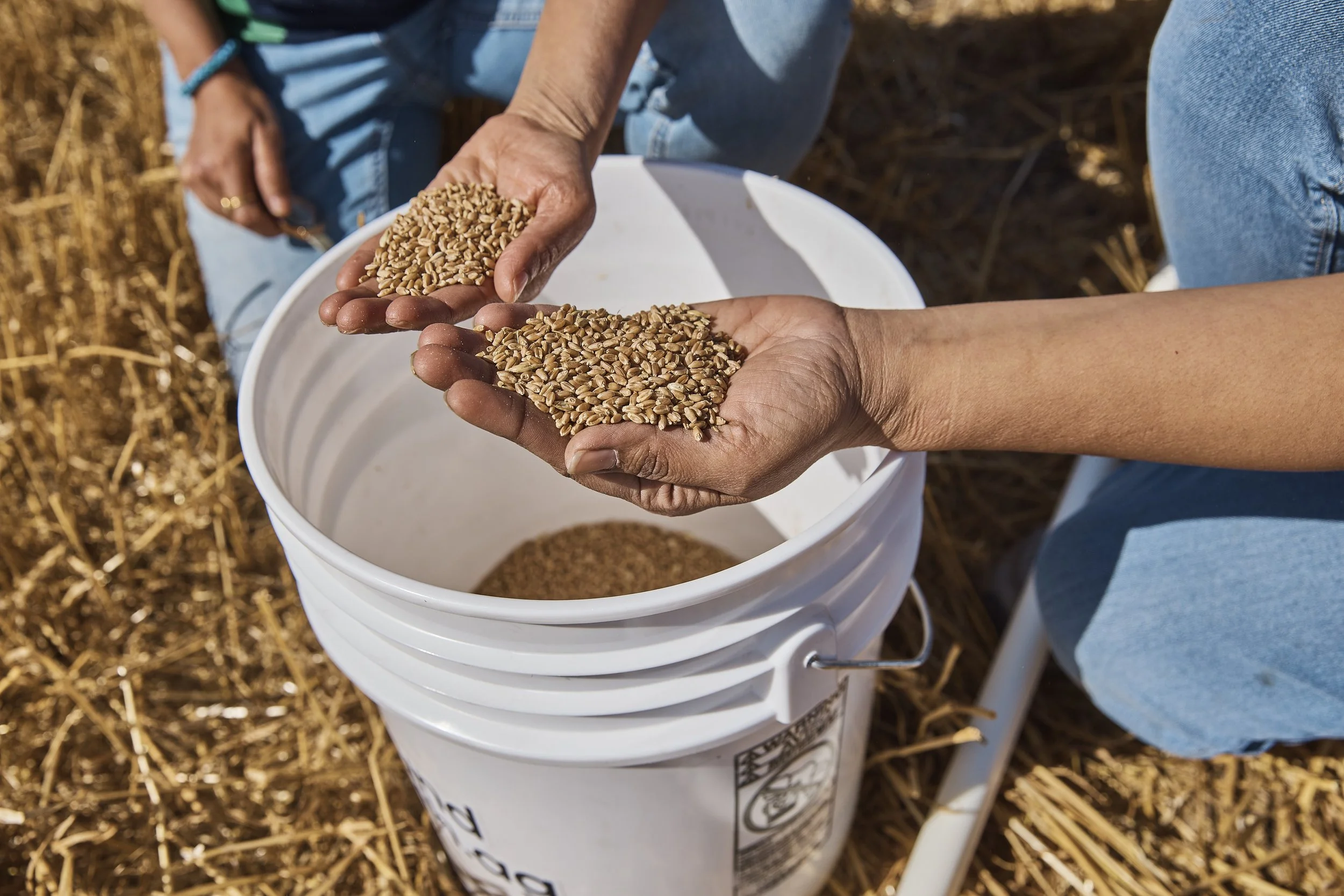
When we talk about grain quality, it is easy to focus on what happens at harvest or at delivery. But grain does not arrive at harvest as a blank slate. It carries the story of the entire growing season, including weather patterns, crop stress, and management decisions. All of these influence how it will be graded, handled, and ultimately valued.
That is also why variability is so common. Grain is not created evenly, so it rarely shows up that way.
Weather Sets the Foundation
Temperature, moisture, and overall growing conditions influence kernel formation and maturity. Consistent conditions support more uniform crops, while stress during key stages can lead to uneven development.
Late-season events like frost, excess rain, or prolonged humidity can introduce quality challenges such as sprouting or discoloration. These effects are rarely uniform across a field or within a load.
Disease and Field Variability
Weather also drives disease pressure, which can impact both the appearance and internal composition of grain.
At the same time, differences in soil type, drainage, and microclimate create variability within the same field. Even with strong management, crops do not develop identically across every acre.
By harvest, grain already contains a mix of these conditions.
Early Decisions Shape Outcomes
Management decisions shape how consistent that mix will be.
Seeding timing influences crop uniformity. Crop protection impacts plant health. Variety selection determines how well the crop handles stress and disease. Even harvest timing and early handling decisions, such as drying or binning, can further influence how quality presents by the time grain is delivered.
Each step adds another layer to what will eventually be measured.
Making Quality Visible Earlier
By the time grain is harvested, quality has already been set in motion. What often changes is when that quality becomes visible through the grading of a sample.
With access to instant grading with our benchtop MV/NIRs, it becomes possible to understand quality as grain is harvested, handled, and moved. Instead of waiting for a result during harvest or even later at delivery, operators can see how variability is showing up in real time and adjust with more confidence.
This creates a clearer connection between what happened in the field and what ends up in the sample.
Interested in seeing how this looks in your operation? Book a demo with our team to learn more.