
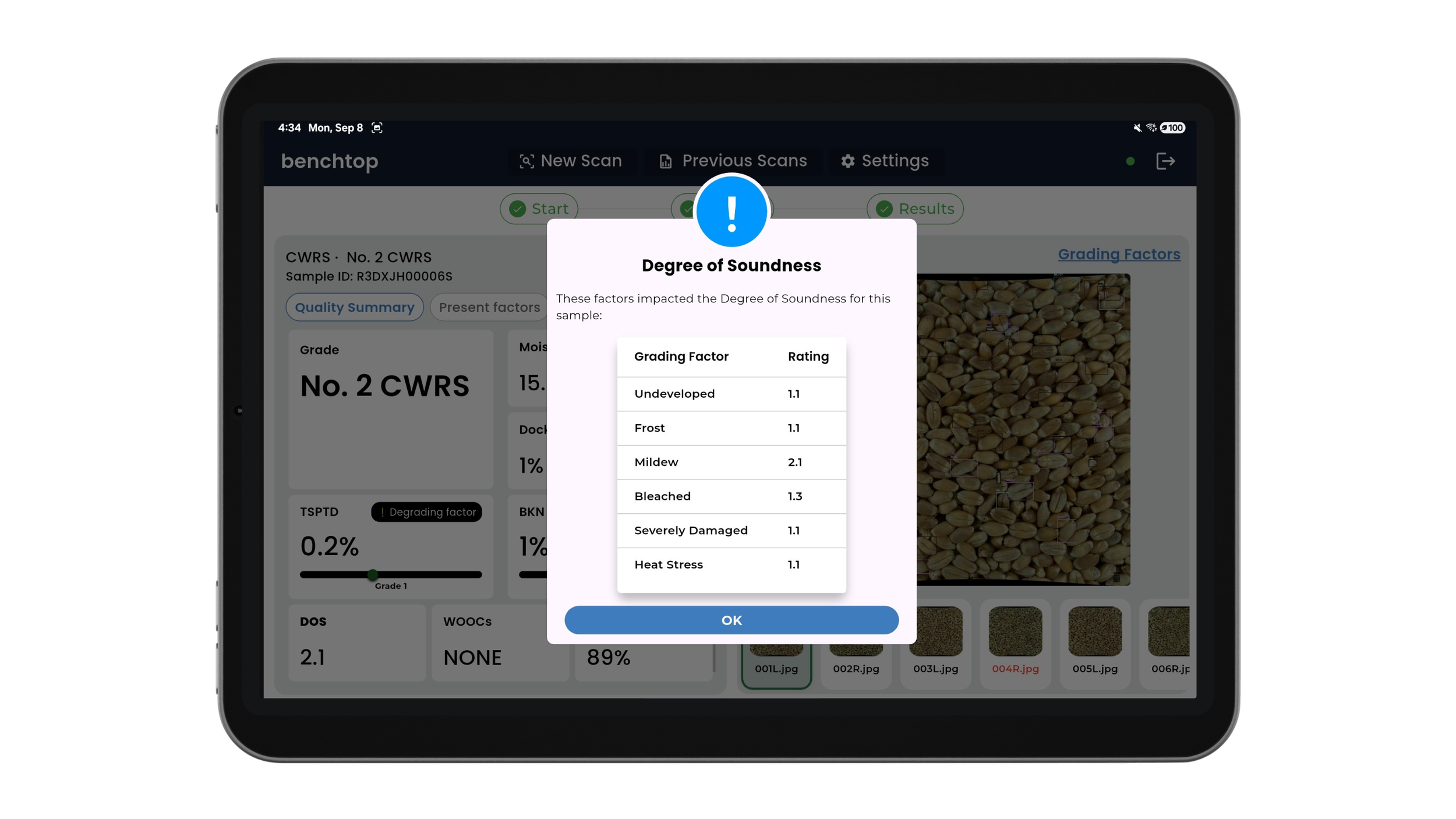
When grading grain, not every quality issue can be captured by a single defect. A sample may not have significant levels of sprouting, disease, or foreign material, yet still show signs that overall grain quality has been affected. This is where Degree of Soundness comes in. Degree of Soundness is used to assess the overall condition of grain and helps determine whether kernels have maintained the characteristics expected of a healthy, well-developed crop.
What Is Degree of Soundness?
Degree of Soundness refers to the overall condition and appearance of grain kernels within a sample. It considers whether the grain appears healthy, mature, and free from factors that may impact quality or end use. Rather than focusing on a single grading factor, Degree of Soundness takes a broader view of the sample's condition.
Grain that is considered sound is typically:
Well developed
Uniform in appearance
Free from significant deterioration
Characteristic of the crop type and grade
Grain that is less sound may show signs of weathering, immaturity, disease, frost damage, sprouting, or other quality concerns.
Why Does Degree of Soundness Matter?
Degree of Soundness provides valuable insight into how grain may perform beyond the grading room.
It can affect:
Grading outcomes: Overall grain condition can influence how a sample is classified.
Storage potential: Grain that shows signs of deterioration may have a shorter storage life.
Processing performance: Sound grain is generally more consistent during milling, crushing, and food production.
Marketability: Buyers often look for grain that demonstrates strong overall quality and consistency.
Because Degree of Soundness considers multiple characteristics together, it helps provide a more complete picture of grain quality.
What Influences Degree of Soundness?
Several factors throughout the growing season and harvest period can impact grain soundness:
Frost before maturity
Extended periods of wet weather
Disease pressure
Sprouting
Heat damage
Insect activity
Delayed harvest
In many cases, Degree of Soundness reflects the cumulative impact of these conditions rather than any single event.
What Can Farmers Do?
Maintaining grain soundness begins long before harvest. Farmers can help protect grain quality by:
Selecting varieties suited to local growing conditions
Managing disease pressure throughout the season
Monitoring crops for weather-related risks
Harvesting as close to maturity as possible
Managing storage conditions to prevent quality deterioration
Understanding grain condition before delivery can also help support marketing and storage decisions.
What Can Graders Do?
Degree of Soundness is one of the more nuanced factors in grain grading because it relies on evaluating the overall condition of the sample rather than identifying a single defect. This requires careful observation and consistency, particularly when quality concerns are subtle. Tools that provide objective, repeatable analysis can help support graders by creating a consistent baseline for evaluating sample condition across locations and throughout the harvest season.
What Can Processors Do?
Processors depend on grain that performs consistently. When grain shows signs of reduced soundness, processors may need to:
Adjust blending strategies
Increase quality monitoring
Modify processing parameters
Manage variability within incoming grain streams
Understanding overall grain condition helps support more predictable processing outcomes.
How Ground Truth Ag Can Help
Our benchtop MV/NIRs technology helps provide a comprehensive view of grain quality by evaluating multiple factors within a single sample. By combining machine vision, machine learning, and NIRs analysis, the system helps support consistent assessment of grain condition and quality.
This provides farmers, graders, and processors with objective insights that help strengthen decision-making throughout the supply chain.